
Practical management of expressed breastmilk
This resource outlines how to manage breastmilk in your centre. It discusses safe handling, preparing and feeding expressed breastmilk. This ensures babies receive safe, high-quality nutrition while supporting families breastfeeding choices.
Why breastmilk is important
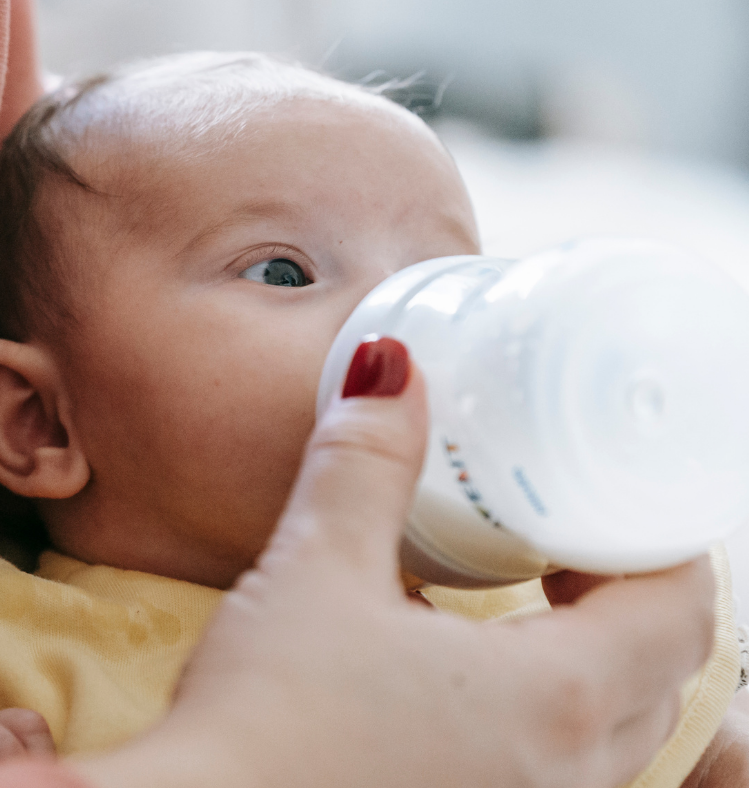
Breastmilk helps babies grow and can protect them from sickness. Some parents bring breastmilk to the centre so their baby can continue breastfeeding.
You can help support parents by safe handling of breastmilk. Making them comfortable bringing in their breastmilk is also helpful.
Receiving breastmilk
Check that the bottle or container has:
- The baby’s full name
- Date and time the expressed milk was collected
- If fresh, previously frozen and thawed
This makes sure the milk goes to the right baby and helps you know how to store the breastmilk.
How to store breastmilk
| Type | How to store |
|---|---|
| Freshly expressed breastmilk | Refrigerated for no more than 72 hours at 5 °C or lower. Store breastmilk at the back of the refrigerator, not in the door. |
| Previously frozen breastmilk and thawed in the fridge but not warmed | Refrigerated for no more than 24 hours at 5 °C or lower. Store breastmilk at the back of the refrigerator, not in the door. |
| Previously frozen breastmilk and thawed outside the fridge in warm water | Use for the feeding or keep refrigerated for up to 4 hours. |
From preparation to feeding
Preparing breastmilk
Before preparing a bottle, wash your hands with soap and water. Always use the oldest dated milk first.
To warm the milk:
- Place the bottle or storage bag in a container of warm water for up to 15 minutes
- Do not use a microwave
Please note: Only warm up bottles one time so not to waste any breastmilk.

Before offering the baby a bottle, it is good to check the temperature of the milk. You can do this by letting some milk drop onto your wrist and see that it is a little bit warm and not hot.
Feeding the baby
- Use the labelled bottle for that baby only
- Feed and watch for baby’s sign that they are full or still hungry
After feeding
- Spill out any leftover warmed milk that was not used
- Wash your hands again
- Clean bottles as per centre rules
- Record the feed to let families know
Please note: Never refreeze thawed breastmilk.
You can get more information and support from the Australian Breastfeeding Association.
References
- Australian Breastfeeding Association. www.breastfeeding.asn.au
- Raising Children: Expressing and storing breastmilk. https://raisingchildren.net.au/newborns/breastfeeding-bottle-feeding/expressing-working-travelling/expressing-breastmilk
- National Health and Medical Research Council. Get up and Grow. Breastfeeding and returning to work. https://www.health.gov.au/resources/publications/breastfeeding-and-returning-to-work
- National Health and Medical Research Council. Infant Feeding Guidelines. https://www.nhmrc.gov.au/health-advice/public-health/nutrition/infant-feeding-guidelines
- National Health and Medical Research Council. Staying healthy: Preventing infectious diseases in early childhood education and care services – 6th Edition. https://www.nhmrc.gov.au/about-us/publications/staying-healthy-guidelines
For more information please phone 1300 22 52 88 or email heas@nnf.org.au
Except where otherwise indicated, the images in this document show models and illustrative settings only, and do not necessarily depict actual services, facilities or recipients of services. This document may contain images of deceased Aboriginal and Torres Strait Islander peoples. In this document, ‘Aboriginal’ refers to both Aboriginal and Torres Strait Islander people. ‘Indigenous’ or ‘Koori/Koorie’ is retained when part of the title of a report, program or quotation. Copyright © State of Victoria 2016
Written and reviewed by dietitians and nutritionists at National Nutrition Foundation, with support from the Victorian Government.

Featured Recipes
Explore all recipes






Want to assess your menu?

The Healthy Eating Advisory Service acknowledges the Traditional Owners of the land on which we operate. We pay our respects to them, their culture and their Elders past and present.

The Healthy Eating Advisory Service is delivered by experienced nutritionists and dietitians at National Nutrition Foundation, with support from the Victorian Government.


Register your interest
"*" indicates required fields