
Getting started guide
Outside school hours care (OSHC) services play a big role in the health and wellbeing of the children in their care.
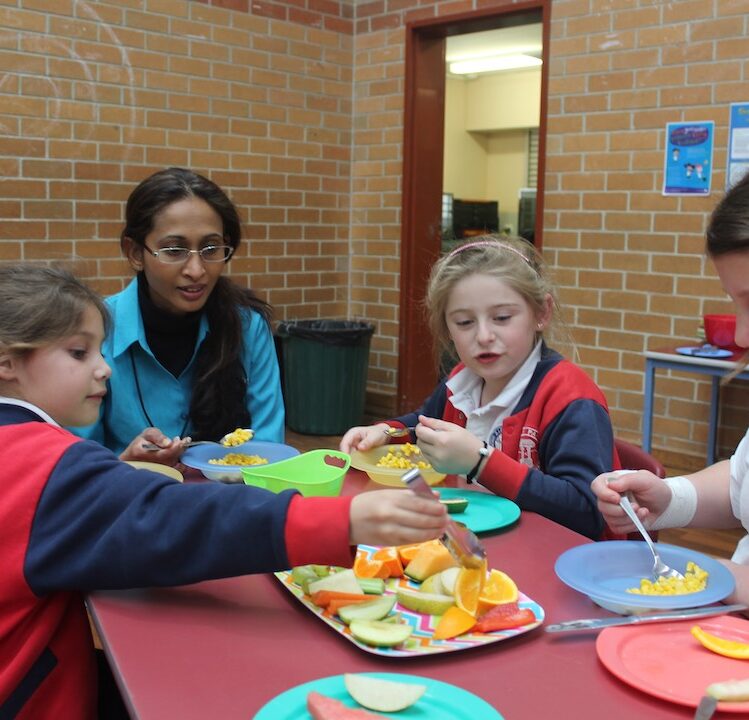
Why promote healthy eating?
On average children spend 11 hours at OSHC per week, where they consume up to 2 of their meals and snacks for the day.
Providing nutritious foods and drinks, can help children establish positive eating behaviours.
How to support healthy eating in OSHC
An OSHC service that is effectively providing and promoting healthier food and drinks will:
- provide food and drinks that meet the Food and drink guidelines for outside school hours care
- have a healthy eating policy and procedures in place to support healthy eating and sustain changes
- have meals and snacks that support and promote healthy eating
- promote healthy eating in the curriculum and through positive role modelling
- engage with families to support them in reinforcing healthy eating messages at home
Benefits of providing healthy foods and drinks
Providing and promoting healthy food and drinks supports children’s:
- growth and development
- mental health
- oral health
- reduced risk of developing health issues later in life
It can also:
- help your service meet the healthy eating requirements of the National Quality Framework and the Food and drink guidelines for outside school hours care
- support the enviroment, for example, preparing simple, fresh and healthy foods can reduce food waste and packaging
A whole-service approach
A whole-service approach brings together leadership (management), staff, students and families to promote healthy eating. Everyone has a role to play.
The steps below outline the suggested process you can follow to achieve this; however, it may not always be possible or suitable to work through them in the recommended order.
Step 1. Secure leadership commitment and engage key stakeholders
To bring about long-lasting, healthy changes seek leadership from management and commitment from others such as coordinators, cooks and educators.
When managers actively lead change, it helps everyone in your service to feel supported and motivated to be involved.
To start the process of making healthy changes:
- speak to managers about the importance of healthy eating, and the plan for change. Obtain their ongoing support for making healthy changes and encourage them to take an active role in the change process
- communicate that healthy eating changes assist the service to meet requirements of the National Quality Standard and regulations and demonstrate best practice to the parents and carers of the children at your service
- work with management to ensure there is adequate time, resourcing and support for changes

Making the switch is easier than you think! We encourage you to register for Vic Kids Eat Well – an exciting state-wide movement that’s focused on transforming the food and drink environments in schools and other community organisations where kids spend their time. Register here.
Remember, healthy eating is not a job for just one person! In fact, everyone in your service has a role to play.
Once you have secured management support create a working group or committee that includes key staff, parents, community members and management; then select someone to coordinate the group (this group can drive change, decide on goals, timelines and strategies, and encourage and support other staff to participate).
Step 2. Develop a healthy eating policy
Creating a healthy eating policy in your service will help to embed and maintain healthy changes.
It also provides your service’s community (staff, parents and if your OSHC is connected to a school, the wider school community) with clear and consistent information about your goals and practices.
Your healthy eating working group can work together to develop a new policy or review your existing one. Once this policy is approved, communicate it to your whole service community.
The policy should include actions related to:
- leadership and commitment
- a healthy physical environment
- a healthy culture
- supported staff and educators
- families and community partnerships
Having a healthy eating policy is also a requirement of The National Quality Standard.
Factsheet: Creating a healthy eating policy
Step 3. Recommend staff complete online training
OSHC staff can learn how to plan healthy menus and promote healthy eating with our free online training module.
Online training can be completed anywhere, anytime. Each module takes less than one hour to complete and participants receive a certificate of completion.
Healthy eating in outside schools hours care
In this interactive module, OSHC educators will learn:
- about the Food and drink guidelines for outside school hours care
- how to plan healthy menus
- simple meal, snack and drink ideas for children
- healthy ingredient swaps and shopping tips
- ways to deal with challenges like food allergies and budgeting
- and much more!
You can assess your service’s current menus to check if they meet the food and drink guidelines for OSHC.
To assess your OSHC menu use this checklist.
Key resource: Food and drink guidelines for OSHC
Step 5. Making changes
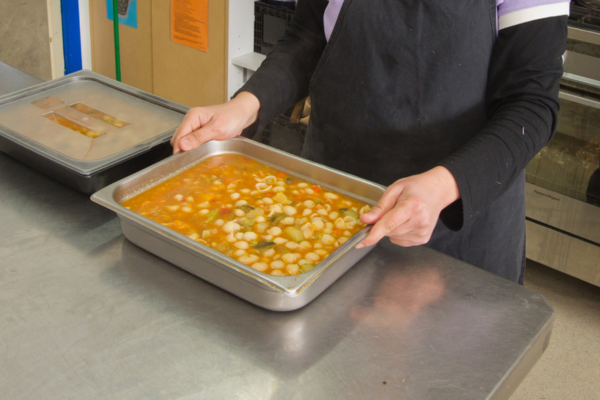
After completing training and assessing your menu, you can start making changes to your current menus, and plan future ones. The best way to start is by making simple changes that will have a big impact.
Start by making sure:
Five food groups
- All meals and snacks are based on food from the five food groups: fruits; vegetables and legumes; grain (cereal) foods; milk, yoghurt, cheese and/or alternatives; lean meat and poultry, fish, eggs, tofu, nuts and seeds and legumes/beans).
Variety
- Provide a variety of fruit and vegetables.
Foods not to include on the menu
- ‘Discretionary’ foods and drinks are not on the menu. Discretionary foods and drinks are items that are high in saturated fat, added sugar and/or salt and low in nutritional value. This includes: confectionary, lollies, soft drinks and sugar sweetened drinks and deep fried foods.
Drinks
- Water is freely available.
You can use the checklist for outside school hours care to plan new menus, and update existing ones.
Promote healthy eating
Coordinators and educators have an important role to play in promoting healthy eating to children.
The National Quality Framework recommends that early childhood education and care services support all aspects of children’s health. This includes healthy eating, ensuring that they are teaching children that healthy lifestyles underpin everyday routines and experiences.
Examples of how educators can promote healthy eating include:
- teaching the children about foods through discussions, questions, games and cooking activities
- where possible include a kitchen gardens or visits to local food growers or farms during holiday programs
- making mealtimes relaxed and comfortable
- talking in positive ways about the foods the children are eating
- encouraging children to try new foods
Host healthy events
OSHC services can reinforce healthy eating messages and create a culture where healthy eating is common by incorporating healthy foods and drinks into events and activities.
This includes ‘special menus’ for birthdays or other celebrations, holiday program activities or excursions or family and community events.
Step 6. Celebrate success
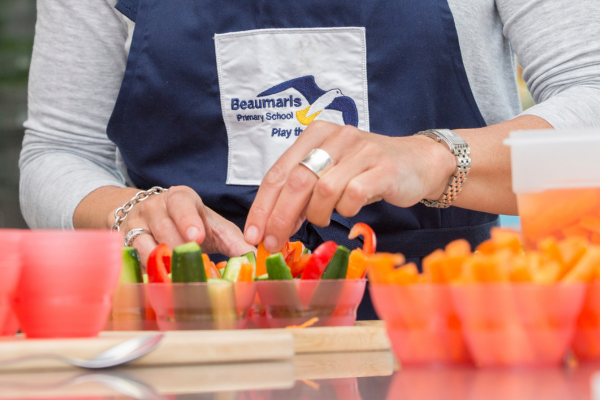
It is important to continually reflect on, communicate and celebrate your progress. This is a great way to keep staff and families involved and motivated.
You could provide regular updates and share achievements in your:
- newsletter
- notice boards
- social media
- in conversations
These platforms all provide a great way to celebrate and share your successes.
Communicating successes can also demonstrate to management the impact you have made and may help you to secure their ongoing support.
Step 7. Maintaining changes
Maintaining your changes and ensuring healthy eating remains a priority in your organisation is important.
Your service’s healthy eating working group can help to keep healthy eating on the radar by ensuring a policy is in place and continually review and update it.
Maintain your progress by:
- reviewing your menus regularly to ensure they still meet the guidelines
- reviewing your healthy eating policy every 12-24 months
- ensuring all new staff complete the online training as part of their induction
- speaking to your manager about communicating your healthy eating plan to families
- monitoring how your service is progressing
- seeking feedback from staff and families (via surveys and similar) to identify any issues and make sure you are on track to achieve your goals
For more information please phone 1300 22 52 88 or email heas@nnf.org.au
Except where otherwise indicated, the images in this document show models and illustrative settings only, and do not necessarily depict actual services, facilities or recipients of services. This document may contain images of deceased Aboriginal and Torres Strait Islander peoples. In this document, ‘Aboriginal’ refers to both Aboriginal and Torres Strait Islander people. ‘Indigenous’ or ‘Koori/Koorie’ is retained when part of the title of a report, program or quotation. Copyright © State of Victoria 2016
Written and reviewed by dietitians and nutritionists at National Nutrition Foundation, with support from the Victorian Government.




Want to assess your menu?


The Healthy Eating Advisory Service acknowledges the Traditional Owners of the land on which we operate. We pay our respects to them, their culture and their Elders past and present.

The Healthy Eating Advisory Service is delivered by experienced nutritionists and dietitians at National Nutrition Foundation, with support from the Victorian Government.


Register your interest
"*" indicates required fields