Taste the rainbow
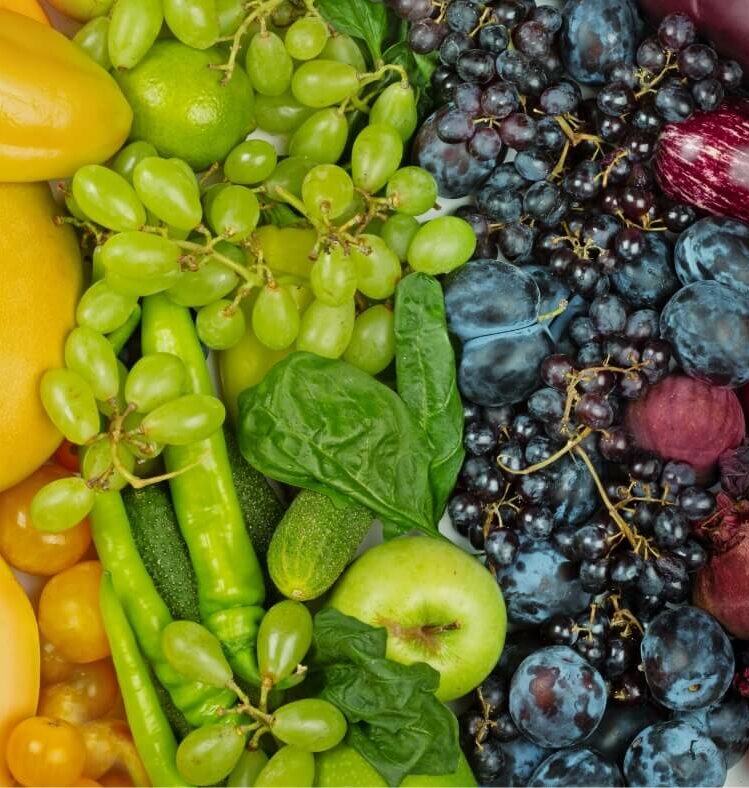
This is a rainbow-themed series of activities to expose children to different vegetables and fruits outside of meal times.
These activities can be done over a few days or a week whilst working on other learning outcomes.

It is aimed at 2-4 year old children. You can tailor all activities to suit the children in your care.
You can also modify depending on the equipment you have on hand in your service.
This activity has 3 parts:
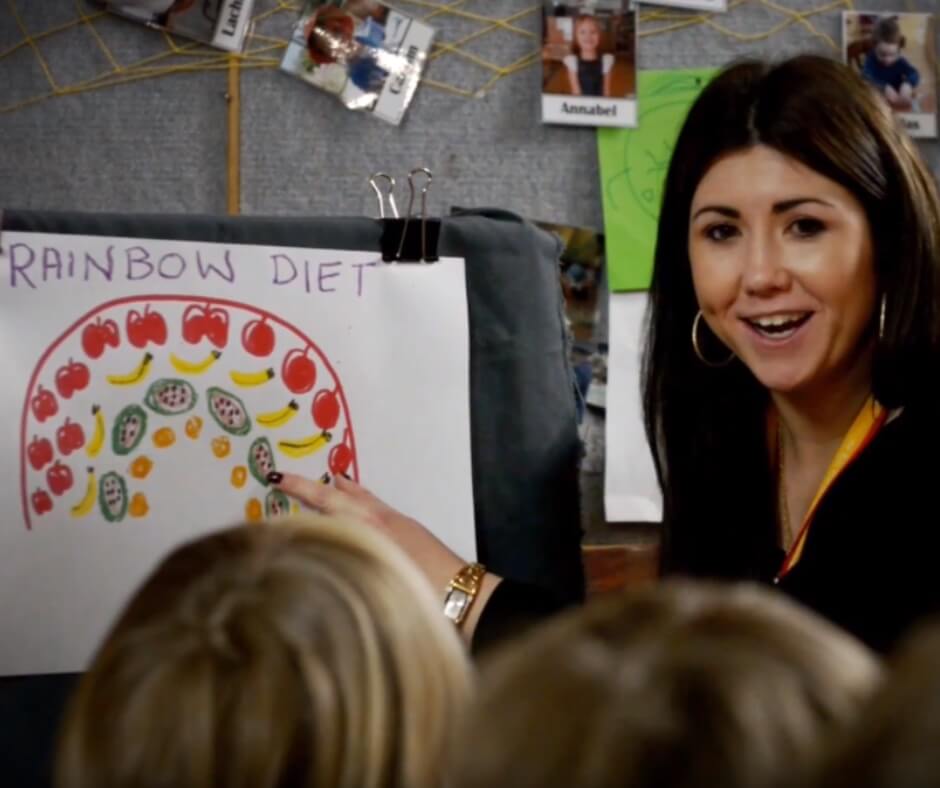
- Read the rainbow: Read books to introduce children to the idea of ‘rainbow foods’ and why we should eat them.
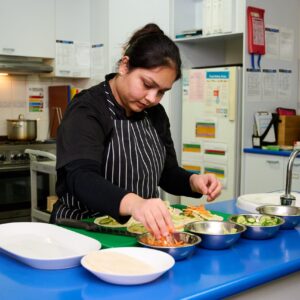
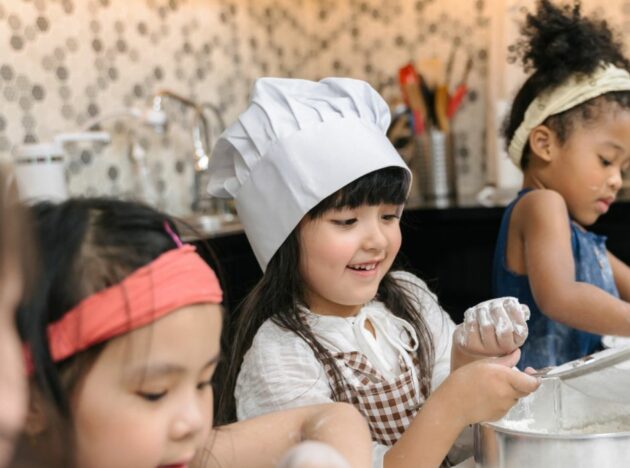
- Cook the rainbow: Involve children in cooking. Get them to choose the recipe and vegetables to go in your rainbow recipe. Let them help you put it together.
- Eat the rainbow: This is a guided experience where children are exposed to new vegetables in a safe and exploratory manner.
Part 1: Read the rainbow
You will need:
- A reading spot
- A vegetable-themed book
Process:
- Bring the children together in a quiet reading spot and tell them about the story you are going to read together. As you are reading the story ask the children prompting questions.
- Read the story. As you go, engage the children by asking questions, such as:
- “What colours can you see on this page?”
- “What vegetables can you see here?”
- “Who can tell me what this vegetable is called?”
Read the story several times over a 1-2 weeks before moving on to Part 2. This allows children to better engage with the story and its healthy eating messages.
Vegetable-themed books you can read to to children
| Every colour soup by Jorey Hurley | I can eat a rainbow by Annabel Karmel | I will never not ever eat a tomato by Lauren Child |
| I like vegetables by Lorena Siminovich | Eating the alphabet by Lois Ehlert | Monsters don't eat broccoli by Jean Barbara Hicks |
| Jasper McFlea will not eat his tea by Lee Fox & Mitch Vane | Oliver's vegetables by Vivian French | Rainbow Plate by Dr Preeya Alexander |
| Cools as a cucumber by Sally Smallwood | Are you eating something green? by Ryan Sias | Super Veggie Four by Golden Plains Shire |
Part 2: Cook the rainbow
You will need:
- Some simple vegetable-packed recipes, such as pizzas, salad, or soup
- Vegetables in 3-5 different colours
- Cooking equipment (this will depend on what you are making, and the facilities you have)
- A place for cooking
Process:
- This activity should be child-led. Start by presenting the children with a couple of meal options to select from.
- Guide them to select the colours of vegetables that should go into the recipe. For example, if the children chose pizza, they might pick red tomato, green spinach, yellow capsicum, orange pumpkin and purple eggplant.
- Once the recipe and key ingredients have been selected, you can start cooking!
Talking points:
- As you are cooking, ask questions such as:
- “Lilly could you come and help me put the capsicum on our pizza?”
- “What colour should we add next?”
- “How do you think it will taste?
- “Are you excited to try our recipe?”
- “Is this enough?”
- “Let’s count together as we add the pumpkin pieces. 1, 2…”
Make sure you follow proper food safety and hygiene practices. Always get the children to wash their hands before and after cooking activities.
You can find healthy recipe ideas on our website.
Part 3: Taste the rainbow

You will need:
- Your vegetable recipe, cooked and ready to taste
- A mealtime location
Process:
- Sit the children at a table so they can see you.
- Announce that you are going to try the food you have made together.
- Role model trying the food without pressure.
- Place the food on the table and offer to children if they want to try.
Talking points:
- Talk about the different foods and encourage the children to reflect. Ask questions, such as:
- “What colours can you see?”
- “Do you remember what we put in our recipe?”
- “Can you smell it? What does it smell like?”
- “I think I will taste the orange colour first. What will you try first?”
- “I wonder if it’s crunchy. I’m going to bite it! Did you hear that? It’s chewy, not crunchy. Is yours crunchy?”
- “Great tasting, Sarah. Ryan, what is your favourite colour? Give it a little nibble to see what it tastes like?”
- “Are you going to have a shark bite or a fish nibble?”
The key is to ensure this is a fun, safe environment for the children to explore new things.
It is important that they are not pressured in any way, and feel encouraged to try something new in whatever way they feel comfortable.
Even if they do not eat anything, and just touch it or smell it instead, that is a great step in the right direction.
Where to next?
Questions to help you think about building on these activities:
- How can you extend on this learning experience?
- What does embedding healthy eating activities into the curriculum look like for different age groups?
- How can you involve your families in these activities?
- Which parts of these activities could you add to, to help children keep learning?
- How did the children respond to, and engage in, the activities?
- Where do you think the children might want to go next, and how can you extend the activities?
Links to learning frameworks
National Quality Standard
- Quality Area 1: Education program and practice (Elements 1.2.1, 1.2.2)
- Quality Area 2: Children’s health and safety (Element 2.1.3)
- Quality Area 3: Physical environment (Elements 3.1.1, 3.2.2)
- Quality Area 5: Relationships with children (Elements 5.1.1, 5.2.1, 5.2.2)
Early Years Learning Framework
- Learning Outcome 1:
- Children develop their emerging autonomy, inter-dependence, resilience, and sense of agency
- Children learn to interact in relation to others with care, empathy and respect.
- Learning Outcome 2: Children respond to diversity with respect
- Learning Outcome 3: Children have a strong sense of wellbeing
- Learning Outcome 4: Children are confident and involved learners
- Learning Outcome 5: Children interact verbally and non-verbally with others for a range of purposes
Developmental skills
- Social skills: Active listening, interactions with others, turn-taking, patience, concentration, language
- Cognition: Enhancing knowledge, learning new skills, critical thinking
- Motor skills: Fine and gross motor- sitting, measuring, tipping, stirring, using cutlery
- STEM skills: Mathematics, science
For more information please phone 1300 22 52 88 or email heas@nnf.org.au
Except where otherwise indicated, the images in this document show models and illustrative settings only, and do not necessarily depict actual services, facilities or recipients of services. This document may contain images of deceased Aboriginal and Torres Strait Islander peoples. In this document, ‘Aboriginal’ refers to both Aboriginal and Torres Strait Islander people. ‘Indigenous’ or ‘Koori/Koorie’ is retained when part of the title of a report, program or quotation. Copyright © State of Victoria 2016
Written and reviewed by dietitians and nutritionists at National Nutrition Foundation, with support from the Victorian Government.

Featured Recipes
Explore all recipes
Want to assess your menu?

The Healthy Eating Advisory Service acknowledges the Traditional Owners of the land on which we operate. We pay our respects to them, their culture and their Elders past and present.

The Healthy Eating Advisory Service is delivered by experienced nutritionists and dietitians at National Nutrition Foundation, with support from the Victorian Government.


Register your interest
"*" indicates required fields