Sugary drinks in public health services
Health services have a key leadership role in providing healthier food and drink options to support the health and wellbeing of their staff and visitors.
Policy directive: sugary drinks
The Victorian Government introduced the ‘Healthy choices: policy directive for Victorian public health services’ (the Policy directive) in 2021 with new targets for the sale and supply of foods and drinks – including the removal of sugary drinks.
The decision to remove sugary drinks from Victorian public health services is based on a large body of evidence of the benefits including:
- the COAG Health Council’s Call to action: health sector to lead in healthier food and drink choices for visitors and staff.
- the World Health Organization Action framework for developing and implementing public food procurement and service policies for a healthy diet
Regular consumption of sugary drinks can impact overall health, including oral health. Supporting healthier drink choices can help promote wellbeing and reduce the risk of conditions such as Type 2 diabetes, cardiovascular disease, high blood pressure, sleep apnoea, some musculoskeletal conditions and some cancers.
01 Drinks
Vending and in-house retail food outlets:
- No RED drinks to be available or promoted/advertised
- At least 50% GREEN drinks, and no more than 20% drinks containing added sweeteners (classified AMBER) to be available
Catering:
- No RED drinks to be provided (with majority of options to be GREEN)
02 Who does the policy apply to?
The Policy directive applies to all sites and facilities across public health services including, but not limited to:
- hospitals
- public sector residential aged care services (PSRACS)
- integrated community health services
The Policy directive applies to the following food services within public health services:
- in-house managed retail food outlets, including items purchased by staff and visitors from patient/resident menus
- all vending machines (managed in-house and privately
- all catering* provided to visitors and staff
*Catering applies to staff procuring food and drinks with health service (government funds) for meetings, functions, and events. This includes occasions such as workshops, conferences, community events, launches, celebrations and ceremonies, as well as client or community education, information, or training programs. It also includes food/drinks provided (free) on the ward or in staff rooms/waiting rooms for staff/visitors (e.g. tea/coffee, water, fruit, biscuits, lollies). Whilst not included in the Policy directive, health services are encouraged to promote and communicate their healthy catering policy to any external groups using their facilities, for example community support groups.
03 What are sugary drinks?
Sugary drinks (or sugar-sweetened beverages) include all non-alcoholic, water-based drinks with added sugar. ‘Sugar-sweetened’ refers to products with added sugar, for example sucrose (sugar), fructose, glucose, honey, fruit juice concentrate, fruit sugar syrup, deionised fruit juice and similar ingredients. This includes, but is not limited to regular sugar versions of the following:
- soft drinks
- energy drinks
- fruit drinks or fruit juice with added sugar
- sports drinks/waters
- cordials
- flavoured mineral waters
- flavoured waters
- kombucha with added sugar
- coconut water with added sugar
- flavoured iced teas
- ice crushes
These drinks are classified as RED according to the Victorian Government’s Healthy Choices guidelines and are based on ‘discretionary choices’ in the Australian dietary guidelines.
These items are not essential in a balanced diet and can contribute to excess energy intake and chronic disease if consumed frequently or in large amounts.
Other RED category drinks that are not to be available, provided or advertised/promoted under the Policy directive include:
- Large serves of fruit juice (over 250ml)
- Flavoured milks more than 1600kJ per serve
- Artificially sweetened energy drinks in large serve sizes (over 250 ml)
- High protein drinks and protein shakes (over 300 ml)
- Alcoholic drinks

The ‘traffic light’ system is to be used behind the scenes to support menu planning. It is not recommended to display the ‘traffic light’ system, label foods and drinks as GREEN, AMBER or RED or use for educational purposes, particularly in settings with children.
Whilst RED food and drink options should be avoided wherever possible, it is recognised that health services may provide small amounts of RED foods or drinks, such as alcohol, for occasional and defined events. If any alcohol is provided on those occasions, it should be in line with the following:
- Ideally, ordered with prior approval of a relevant executive or delegate
- If alcohol is provided, it must be served responsibly in compliance with Victorian liquor regulations
- Clearly documented and communicated in a relevant organisational policy (e.g., catering, health and wellbeing, or OH&S policies)
04 What drinks can be sold or provided?
- Water – plain, sparkling or flavoured with natural essence
- Milk or alternatives, plain and some flavoured
- Juices with at least 99% fruit (with no added sugar)
- Artificially sweetened (diet) drinks (with no added sugar)
| GREEN | AMBER | RED |
|---|---|---|
| Plain still or sparkling water | Fruit juice (99% real fruit juice, no added sugar and less than 250mL serve size) | ‘Diet’, ‘no sugar’ and ‘low joule’ drinks with no added sugar |
| - Water flavoured with natural essence - Reduced fat plain milk or alternatives* - Reduced-fat flavoured milk or alternatives* equal to or less than 900 kJ per serve - Tea or coffee with reduced fat milk and no added sugar | - Regular fat plain milk - Reduced-fat flavoured milk or alternatives* that are between 900-1600 kJ per serve - Regular-fat milk or alternatives* equal to or less than 1600kJ per serve - Kombucha and other fermented soft drinks (less than 1g of sugar per 100mL, alcohol content equal to or less than 0.5%) - 100% coconut water (no added sugar) and less than 300 kJ - Tea or coffee with regular fat milk and added sugar | - ‘Diet’ or ‘Zero sugar’ soft drinks - Artificially sweetened energy drinks less than 250mL serve size - ‘Zero sugar” sports drinks - ‘Zero sugar’ iced teas |
Use FoodChecker to help you find GREEN and AMBER drinks.
05 Artificially or intensely sweetened drinks
Artificially or intensely sweetened drinks (including ‘diet’, ‘no sugar’ and ‘low joule’) can include less sugar and energy than regular sweet drinks.
Some drinks advertised as ‘diet’, ‘reduced-sugar’ or ‘low-sugar’ may include both artificial/intense sweetener and added sugar. Artificially sweetened drinks are in the AMBER category if they include no added sugar. Under the Policy directive, AMBER category artificially sweetened drinks can make up to 20% of the total proportion of drinks available or displayed. This excludes AMBER flavoured milks.
Examples of artificial or intense sweeteners (including natural sweeteners) are aspartame, saccharin, steviol glycosides, monk fruit extract, erythritol, sorbitol, xyitol, mannitol and sucralose.
Whether sweetened with sugar or artificial sweeteners, all carbonated soft drinks are acidic. Frequent consumption can contribute to the erosion of tooth enamel, a major factor in tooth decay.
Artificially sweetened drinks should be provided in the smallest serve size available (for example, less than 375 ml cans).
Note: This information does not apply to artificially sweetened flavoured milk drinks. For more information on classifying flavoured milks, refer to pg 36 of the Healthy choices: food and drink classification guide.
06 Encouraging healthier drink choices and nudging change
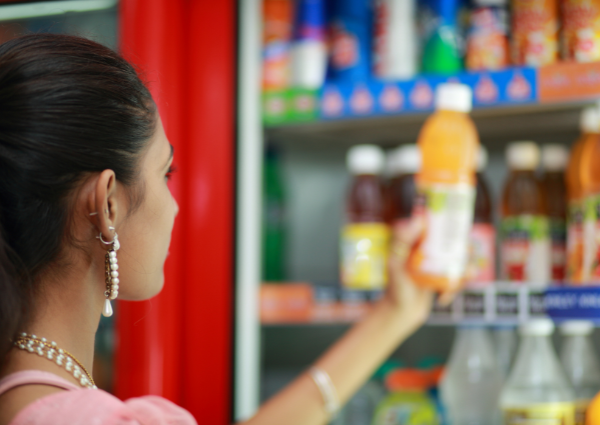
There are a number of ways you can nudge customers and staff to make healthier drink choices by changing how drinks are placed, priced and promoted.
Some ‘nudges’ you could trial in retail outlets and vending machines include:
- Adopt a phased approach to gradually remove RED drinks. Start by reducing some of the lowest selling RED drink options, then gradually start removing the availability of higher selling RED drinks.
- Start communicating the changes with your organisation’s staff via internal communication channels, such as email or the organisation’s intranet.
- Once RED stock is selling through, begin replacing these with GREEN or AMBER options.
- Incentivise the purchasing of GREEN drinks by subsidising the price or including them in healthy meal deals.
- Display GREEN drinks most prominently (e.g. at eye level).
For more information please phone 1300 22 52 88 or email heas@nnf.org.au
Except where otherwise indicated, the images in this document show models and illustrative settings only, and do not necessarily depict actual services, facilities or recipients of services. This document may contain images of deceased Aboriginal and Torres Strait Islander peoples. In this document, ‘Aboriginal’ refers to both Aboriginal and Torres Strait Islander people. ‘Indigenous’ or ‘Koori/Koorie’ is retained when part of the title of a report, program or quotation. Copyright © State of Victoria 2016
Written and reviewed by dietitians and nutritionists at National Nutrition Foundation, with support from the Victorian Government.

Featured recipes
Explore all recipes
Want to assess your menu?

The Healthy Eating Advisory Service acknowledges the Traditional Owners of the land on which we operate. We pay our respects to them, their culture and their Elders past and present.

The Healthy Eating Advisory Service is delivered by experienced nutritionists and dietitians at National Nutrition Foundation, with support from the Victorian Government.


Register your interest
"*" indicates required fields