Getting started guide
Implementing the Healthy Choices guidelines
This ‘Getting Started’ guide has been developed to provide you with:
- an overview of the Healthy Choices guidelines
- a practical process for implementation of the guidelines in your organisation
- supporting resources and information for implementation
Why implement Healthy Choices in your organisation?
Your organisation can play a big role in helping staff and visitors to make healthy lifestyle choices.
Whether you are a smaller organisation providing catering at meetings and events, or a larger organisation with vending machines and/or a retail outlet, you can support your staff and visitors to make the healthier choice, the easier choice.
By providing healthy foods and drinks in line with the Victorian Government’s Healthy Choices guidelines key outcomes include:
- increasing staff wellbeing, productivity and performance
- supporting staff, customers’ and visitors’ mental health and wellbeing
- driving change and being a leader for healthy eating in your industry
- meeting growing consumer demand for healthier foods and drinks
- for organisations like health services and sport and recreation facilities, it also aligns with their broader purpose of supporting the community’s health and wellbeing.
Healthy choices guidelines overview
The Victorian Government’s Healthy Choices guidelines help to make sure that healthy foods and drinks are offered and promoted in key places where Victorians health services, sport and recreation facilities, workplaces, universities and parks spend their time.
The Healthy Choices framework includes:
1- Classification guide
This guide explains the Victorian Government’s ‘traffic light’ system for classifying foods and drinks as GREEN (best choice), AMBER (choose carefully) or RED (limit).
This ‘traffic light’ system is to be used behind the scenes by staff in settings to support menu planning for the provision of healthier food and drink options in retail outlets, vending machines and catering. The Healthy Eating Advisory Service and the Department of Health do not encourage public facing use of the ‘traffic light’ system to signpost food and drinks on display. (i.e. does not encourage labelling food and drinks as GREEN, AMBER or RED).
2 – Policy guidelines
To provide practical guidance on implementation of Healthy Choices in health services, sport and recreation facilities, workplaces and parks. The policy documents address:
- GREEN, AMBER and RED foods and drinks through retail outlets, vending machines and catering
- how foods and drinks are advertised, promoted and displayed
- foods and drinks used for fundraising, prizes and give aways
- sponsorship by food industry
- how the physical environment supports healthy eating
- supportive environments for breastfeeding
3 – Policy directive: that applies to Victorian public health services
Policy directive is based on the existing Healthy choices: food and drink classification guide and policy guidelines for hospitals and health services and Healthy choices: workplace healthy eating policy and catering guide
The Policy directive includes a new requirement for high sugar (RED category) drinks not to be sold, provided or promoted in any in-house managed retail outlets, all vending, all catering, and items purchased by staff and visitors from patient/resident menus.
It applies to all sites/facilities across public health services, including, but not limited to hospitals, public sector residential aged care services (PSRACS) and integrated community health services.

Healthy Choices – Key documents
Health services
- Healthy choices: policy directive for Victorian public health services
- Healthy choices: policy guidelines for hospitals and health services
Sport and recreation facilities
Workplaces and universities
Parks
The Healthy choices: food and drink classification guide
The Healthy choices: food and drink classification guide explains the Victorian Government’s ‘traffic light’ system for classifying foods and drinks as GREEN (best choice), AMBER (choose carefully) or RED (limit) based on their nutritional value.
The guide describes foods and drinks in each category and explains how to decide which classification a food or drink has.
You can download the Healthy choices: food and drink classification guide from the Department of Health.
What does the ‘traffic light’ system mean?
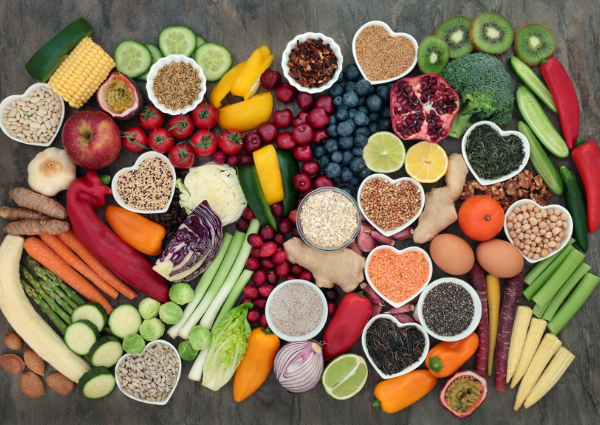
GREEN (Best choice)
Foods and drinks in the GREEN category are the healthiest options. They are usually:
- good sources of important nutrients
- lower in saturated fat, added sugar and/or salt
- lower in energy (kilojoules)
- higher in fibre
GREEN foods and drinks should always be available and promoted as the best choices.
Wherever foods and drinks are offered (e.g., retail outlets, vending machines and catering):
- at least 50% of choices should be from the GREEN category
- promote them in specials, meal deals and prominent positions of the outlet
AMBER (Choose carefully)
AMBER foods and drinks should be selected carefully and eaten in moderation.
Although AMBER items may provide some good nutrients they can:
- lead to excess energy (kilojoule) intake
- contain saturated fat, added sugar and/or salt
AMBER foods and drinks may be offered but should not dominate the menu. They should not be promoted over GREEN options.
RED (Limit)
Foods and drinks in the RED category are not essential in a balanced diet. These items can contribute to excess energy intake and developing chronic diseases if consumed in large amounts.
In general, RED choices are:
- high in energy (kilojoules)
- high in saturated fat, added sugar and/or salt
- low in important nutrients such as fibre.
RED foods and drinks should be consumed rarely and only in small amounts.
In retail outlets and vending machines, no more than 20% of foods and drinks should be from the RED category.
In public health services no RED drinks should be provided in vending machines and in-house managed retail outlets.
RED foods and drinks should not be provided in workplace catering.
Remember The ‘traffic light’ system is to be used behind the scenes to support menu planning. It is not recommended to display the ‘traffic light’ system, label foods and drinks as GREEN, AMBER or RED or use for educational purposes, particularly in settings with children.
The policy guidelines
There are different policy guidelines to help you apply Healthy Choices based on your organisation type such as health services, workplaces, sport and recreation centres and parks.
You can download them from here.
The policy guidelines provide guidance on areas such as:
- providing healthy foods and drinks in retail outlets, vending machines and catering
- organisational policy and contracts about healthy foods and drinks
- food and drink advertising, promotion and display
- using foods and drinks for fundraising, prizes and give-aways
- sponsorship by food industry
- infrastructure and the physical environment to support healthy eating
- supportive environments for breastfeeding.
Healthy choices: policy directive for Victorian public health services
The Healthy choices: policy directive for Victorian public health services (the Policy directive) improve the availability and promotion of healthier food and drink options on hospital premises.
From mid-2021, health services are required to implement the Policy directive.
This Policy directive applies to in-house managed retail food outlets, all vending machines, all staff/event catering, and items purchased by staff and visitors from patient/resident menus within public health services.
How to implement Healthy choices
What does implementation look like?
An organisation that is effectively providing and promoting healthier food and drinks will:
- provide food and drinks that meet the Healthy Choices guidelines, including retail food outlets, catering, fundraising, events and/or vending
- promote and market healthy food and drink options only
- have a healthy eating policy and relevant procedures in place to support healthy eating and sustain healthy changes staff events
- have contracts in place that support the healthy eating policy.
The steps below outline a process you can follow to achieve this. However, it may not always be possible to work through them in this order.
You should aim to make progress where you can and in an order suitable to your organisation.
01 Secure leadership support and create a working party
Securing support from your management team and the commitment of your organisation is an important first step.
Management can ensure healthy eating is an organisational priority, allocate adequate resources to implement the Healthy Choices guidelines, and provide approval for policies and project plans. This will help to ensure that changes are implemented and maintained organisation wide.
For assistance in gaining management support see the link provided to access our free training module focused on gaining management support.
Encourage management to:
- take an active role in the change process
- be part of a working party with key stakeholders
- key stakeholders include: food service staff/contractors, health promotion officer/s, dietitians, the communications team and the contract manager/s
- nominate a staff member to lead the working group and assign roles and responsibilities
- allocate adequate time, resourcing and support for changes to occur (e.g., allocate a health promotion staff member to work with your vending supplier or retail outlet)
02 Develop a healthy eating policy
Creating a policy, procedure or guideline is an important step in implementing the Healthy Choices guidelines in your organisation as it will help embed healthy changes and give credibility to this work.#
You can have a specific healthy eating policy, or include healthy eating in existing, relevant policies, such as health and wellbeing, procurement, or sustainability.
03 Team up with food services
Engaging with food service staff is an important step in making changes to the foods and drinks you provide. This could be the staff that manage or work in the retail outlet or kiosk, manage the vending or other supplier contracts or order the catering for your organisation.
Developing a strong and collaborative working relationship is important. Creating a realistic plan for the changes that takes into consideration their concerns, barriers and priorities assists with successful implementation.
Free online training
Free online training is available for chefs, cooks and managers of retail food outlets and catering businesses, and for point-of-sale staff in retail food outlets and other key staff.
Food service staff will gain essential skills and knowledge to implement the Healthy Choices guidelines.
Online training can be done anywhere, anytime. It takes less than one hour to finish, can be completed at your own pace, and you will receive a certificate of completion.
Nourish Network Healthy Retail Toolkit
This free toolkit is a step-by-step guide designed to provide outlet managers and staff with the steps for success in implementing Healthy Choices.
04 Communicate with customers
Engaging with customers to understand their preferences and needs is an important first step in determining changes to your retail environment. Use the below simple survey and analysis tool to gather this information, which will help shape the changes you make.
- Healthy Choices customer survey – use this to gather feedback from your customers
- Healthy Choices customer survey results analysis – input your results into this spreadsheet to easily visualise and interpret feedback
The next step is developing a communications plan to successfully inform customers about the planned changes and promote the work you are doing highlighting why, when and how.
Ideas of how to communicate this information include:
- presentation at staff meetings
- information in staff newsletters, intranet, noticeboards
- social media
- posters throughout the organisation
05 Assess your food and drinks
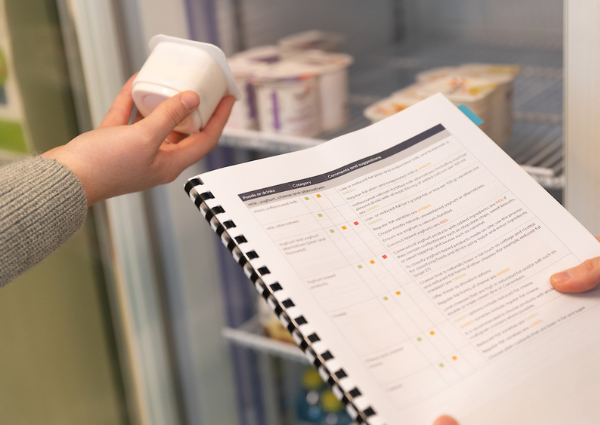
You can use our free online assessment tool, FoodChecker, to assess menus, drinks fridges, vending machines, recipes and products according to the relevant guidelines for your organisation.
You will receive instant feedback on the foods and drinks provided, and tailored recommendations for healthier changes.
You can use a baseline assessment to help plan your changes accordingly.
You can also search the database to find thousands of GREEN, AMBER and RED food and drink products.
06 Making changes
Based on the FoodChecker assessment results, work with the relevant team members to decide on simple changes that will have a big impact.
Find out about priorities and simple changes for catering, vending machines and retail outlets here.
Developing an action plan is a key step in outlining what needs to be changed, how you will make those changes, plan your resources and estimate your timeline.
Modify contracts
Including requirements in contracts with retail outlets, catering and vending suppliers to provide and promote healthy foods and drinks in line with the Healthy Choices guidelines will assist your organisation’s efforts to support healthy eating.
It also ensures food service providers are committed and accountable to your organisation’s standards.
Marketing and feedback
Ensure healthier foods and drinks are attractive and well-presented at the point of sale using tactics like price, placement and promotion.
Staff and visitors often have food and drink suggestions, create an opportunity for them to provide this feedback.
Lastly, keep your staff and visitors engaged by updating them on your latest achievements and informing them about upcoming changes (Step 8 below).
If a contract is up for renewal or tender:
Consider including a clause around requiring suppliers to provide vending machines that meet the Healthy Choices guidelines. If up for tender, look at influencing the tender deliverables by working with your procurement department.
If you have existing contracts with vending suppliers:
Ask them if they have healthier options they could provide. Suppliers are always keen for the next contract and so will try to meet your needs with regards to healthy foods as best they can.
07 Celebrate successes
Communicating your successes and sharing your progress is a great way to celebrate your hard work and keep staff motivated.
This can include internal communication methods like newsletters, reward and recognition initiatives, notice boards or the staff intranet, as well as external channels like social media and the local newspaper.
Some milestones to celebrate include:
- announcing your organisation’s healthy eating plan or targets
- when a healthy eating policy has been created
- when each vending machine, catering menu and/or retail outlet menu has met milestones to work towards or meet the targets of the Healthy choices guidelines
08 Maintaining changes
Maintain your organisation’s progress by:
- reviewing your healthy eating policy every one to two years, including a requirement for regular menu reviews
- embedding healthy eating in contracts and policies
- allocating the responsibility of the Healthy Choices guidelines to a specific team member and the working party by including healthy eating in staff position descriptions and key performance indicators
- recognise a local champion who shows proactive steps to support successful implementation
- making healthy eating a standing agenda item at staff meetings, including senior management where possible
- seeking ongoing feedback from staff, food service providers and visitors (e.g. conduct surveys to determine satisfaction with new menus)
- keeping management informed of your progress and the value of the work so they continue to support the initiative
- supporting food services to:
- include online training as part of the induction processes for new staff
- put procedures in place to ensure any new products or recipes are assessed in FoodChecker and aim to primarily introduce GREEN or AMBER items
- re-assess menus, vending machines and retail offerings every 12 months, or any new menus or menu changes as they occur, to ensure your organisation is still meeting the guidelines
For more information please phone 1300 22 52 88 or email heas@nnf.org.au
Except where otherwise indicated, the images in this document show models and illustrative settings only, and do not necessarily depict actual services, facilities or recipients of services. This document may contain images of deceased Aboriginal and Torres Strait Islander peoples. In this document, ‘Aboriginal’ refers to both Aboriginal and Torres Strait Islander people. ‘Indigenous’ or ‘Koori/Koorie’ is retained when part of the title of a report, program or quotation. Copyright © State of Victoria 2016
Written and reviewed by dietitians and nutritionists at National Nutrition Foundation, with support from the Victorian Government.

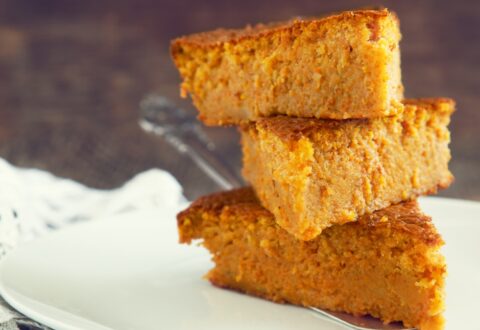
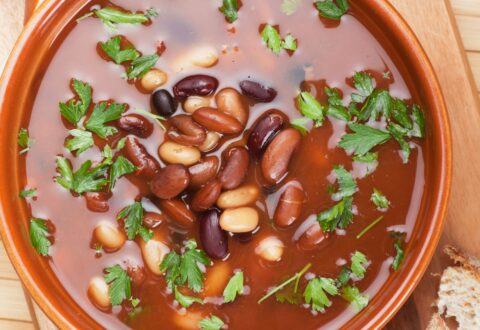
Featured recipes
Explore all recipes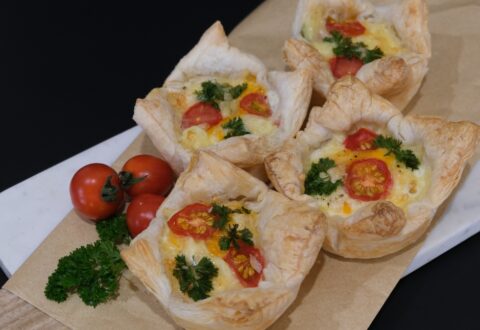


Want to assess your menu?

The Healthy Eating Advisory Service acknowledges the Traditional Owners of the land on which we operate. We pay our respects to them, their culture and their Elders past and present.

The Healthy Eating Advisory Service is delivered by experienced nutritionists and dietitians at National Nutrition Foundation, with support from the Victorian Government.


Register your interest
"*" indicates required fields